
A bad week at the office
In which a rogue analyst ruins the week.

First, the good news
This week the approved analysts have been making some good decisions. There were no serious failures or bugs this week, the system listened into around 50 calls at a time each morning and executed the orders for stocks it liked.
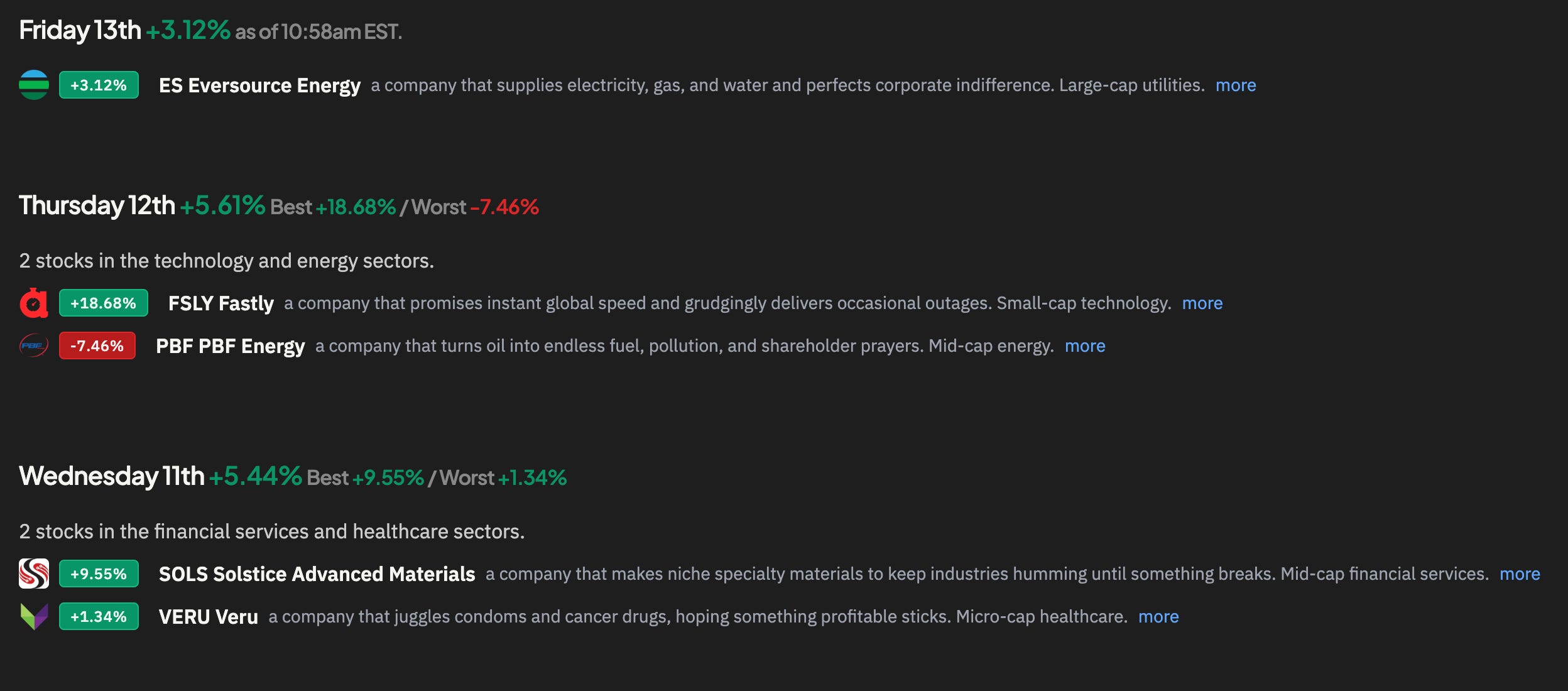
Yesterday was a bad day
Yesterday I accidentally let a rogue analyst loose.
What conclusions?
More patience, avoid tilt, which is “a poker term for a state of mental or emotional confusion or frustration in which a player adopts a suboptimal strategy, usually resulting in the player becoming overly aggressive” If I just let the system I set up last week do its job, we’d be up a lot this week.
Better change control for new analysts e.g. a staging environment where they can run in parallel.
Run backtests over longer periods… $1000 on OpenAI credits would’ve saved me much more here.
The bracket orders (take profit and stop loss) worked well but the take profit can be increased from +15% to +20% … when we have winners let them ride.
How AI has changed my days

I am pretty much only talking to my computer now using Monologue, which is instant and about 10 times better than Apple’s default transcription.
Whilst I’ve been writing this email, I have an AI looking for my new health insurance via OpenAI’s Atlas browser. Another one working on a complete refactoring of another system in Cursor. And one helping me with future writing.
In coding alone, I have been relegated to a mere project manager (or visionary??) with an expensive team of AI engineers working concurrently. With Money Monster there are effectively 10 analysts listening to and acting on each earnings call.
The abstraction is getting higher and higher, I’ve gone from asking for very specific changes (senior engineer)… to providing a high level spec (product manager)…. to just stating the outcome I want (CEO). With no employees.
Lots of good thoughts this and more in this article :
“The future is being shaped by a remarkably small number of people: a few hundred researchers at a handful of companies... OpenAI, Anthropic, Google DeepMind, and a few others. A single training run, managed by a small team over a few months, can produce an AI system that shifts the entire trajectory of the technology. “
People in tech are already realising “I am no longer needed for the actual technical work of my job.”, this was different to six months ago
If you didn’t think AI worked when you tried it, or that it made mistakes, you need to retry the current models and not use the default free ones - even in the last six months their capabilities have transformed.
The major AI companies are now using their own state of the art models to recursively build the next versions of these models, so expect progress to accelerate.
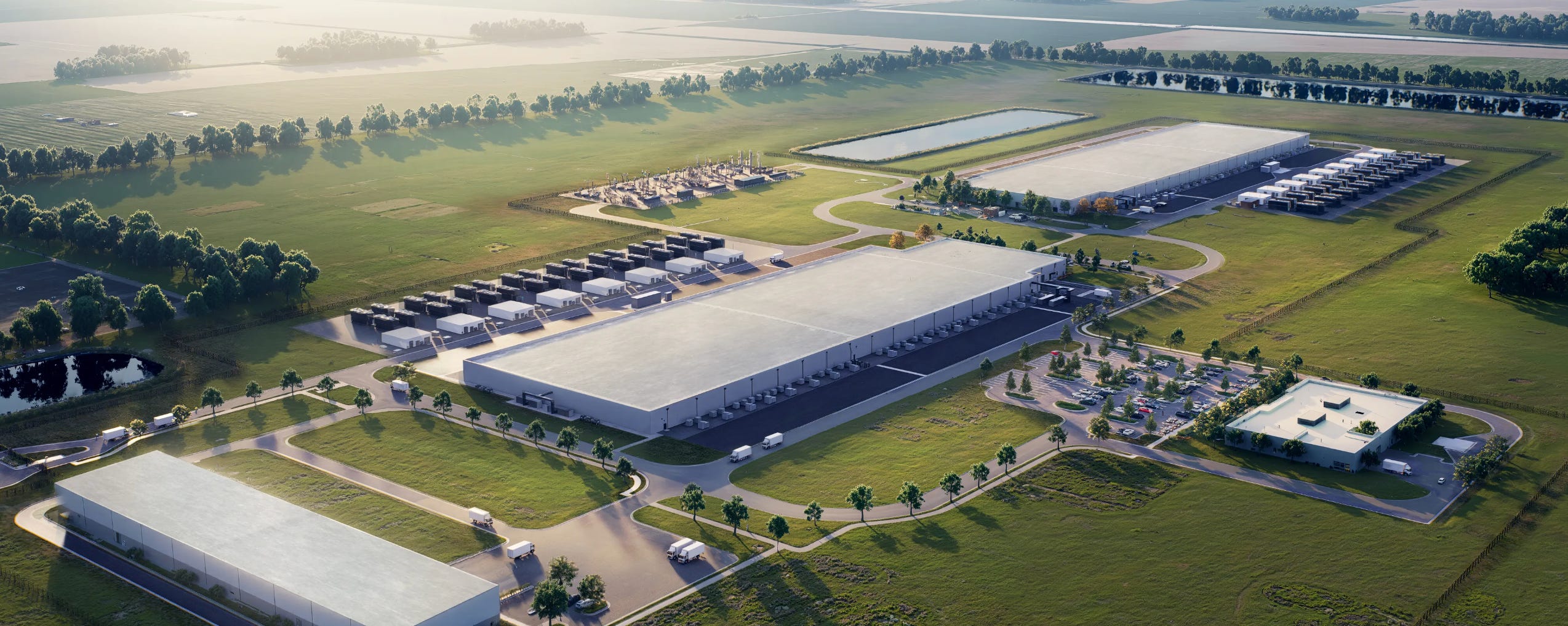
My focus here is around productivity rather than the implications for society, the economy, national security and so on, which Jasmine Sun recently went deep on in her piece about AI populism vs big tech. Somewhere in a building like this in Ohio there is a rack doing all my work.
“Imagine it’s 2027. A new country appears overnight. 50 million citizens, every one smarter than any Nobel Prize winner who has ever lived. They think 10 to 100 times faster than any human. They never sleep. They can use the internet, control robots, direct experiments, and operate anything with a digital interface. What would a national security advisor say?”
—Mark Amodei, U.S. representative for Nevada’s 2nd congressional district
Final note - the siren in the video was for a fatal accident outside my house, a woman on her phone was run over by a careless driver. He wasn’t speeding - he was also on his phone. Stay safe out there.
A